
attack
Jason Morris: Uchi-mata Grip Preparation
A grip-focused seminar excerpt about gi seams and closing the hand before the throw is developed.
Teaching credit: Jason Morris
The shared technique name connects several teaching routes. Morris’s seminar excerpt adds grip preparation rather than a complete throwing sequence. Sampson Judo builds the explanation through forward balance, hip contact and hand control. Stevens uses a simplified practice setup to demonstrate a one-step entry.
Related search terms: uchi mata, uchimata, inner-thigh throw
One lesson explains a complete connected entry; the other asks the partner to take a particular grip and stand square while practicing the motion. Those starting conditions matter when comparing the demonstrations. They are not measurements of which variation wins more matches.
Use the hip-contact and support-foot chapters in the Sampson lesson, then inspect the pivot in Stevens's demonstration. The comparison is about what each teacher is emphasizing; it does not establish a single exclusive version of the throw.
attack
A grip-focused seminar excerpt about gi seams and closing the hand before the throw is developed.
Teaching credit: Jason Morris
attack
Compare the leg contacts in three related throws, with separate chapters for each.
Teaching credit: Travis Stevens
attack
A chaptered reading of the Sampson Judo uchi-mata lesson: forward balance, hip contact, lapel and elbow control, and the foot placement shown in the demonstration.
Teaching credit: Sampson Judo
attack
Study Stevens's short uchi-mata lesson through the practice stance, leg swing and pivot into the center. Compare this entry with Sampson Judo's longer breakdown under the same technique family.
Teaching credit: Travis Stevens
Original teaching uploads · Caption breakdowns pending

Travis Stevens
Original video

JFLOJUDO
Original video

Shintaro Nakano
Original video
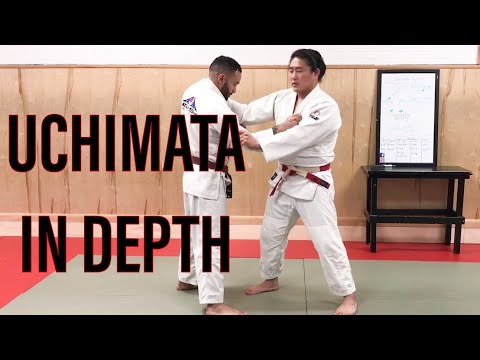
Shintaro Higashi
Original video

Shintaro Higashi
Original video
0 evidence-windowed observations in this technique family. These are selected passages, not total attempts or a success-rate denominator.
No evidence-windowed competition observations are attached to this family yet. The training sources above are available; the competition evidence remains a coverage gap.
Open the filtered observation index → · Compare full exchanges across matches
Before you explore
The techniques shown here are dangerous. They can cause serious injury, permanent disability or death.
Use them only for lawful self-defense or martial arts training and sport. Practice with qualified instruction, appropriate supervision and a consenting training partner.
Tap early. Release immediately when your partner taps or asks you to stop.
Continuing acknowledges this safety notice. Your choice is remembered in this browser.